Team Building That People Actually Want to Do
The Problem With a Lot of Team Building
Mention "team building" at work and you can almost feel the room tense up. Too often, team building means a forced activity, an awkward exercise or an event that feels more like another meeting than a break from one. Even a company happy hour doesn't automatically solve the problem. Put 75 coworkers in a room with drinks and no structure, and people tend to do exactly what you'd expect: they talk to the people they already know. Departments stay together. Friends find friends. The same circles that exist at work often follow everyone to the event. There's nothing wrong with that. But if the goal is to get people interacting in a different way, simply putting everyone in the same room isn't enough.
Give People a Reason to Interact
Games change the equation. Instead of telling coworkers to "network" or asking everyone to participate in an icebreaker, give them something fun to do together. Our Des Moines corporate team-building page outlines a few of the ways we do this, including:
- Bar Olympics — a bar-olympics-style competition mixing games like Skee-Ball, darts and shuffleboard to crown the best overall team. Great for 4–60 people and an energy boost.
- RicoWager — teams or individuals wager points across darts, shuffleboard and Skee-Ball based on their confidence, rewarding strategy as much as skill. Built for 10–50 people.
- Flippy Cup — a fast-paced relay where teams compete cup by cup. A nostalgic crowd favorite for groups of 10–100.
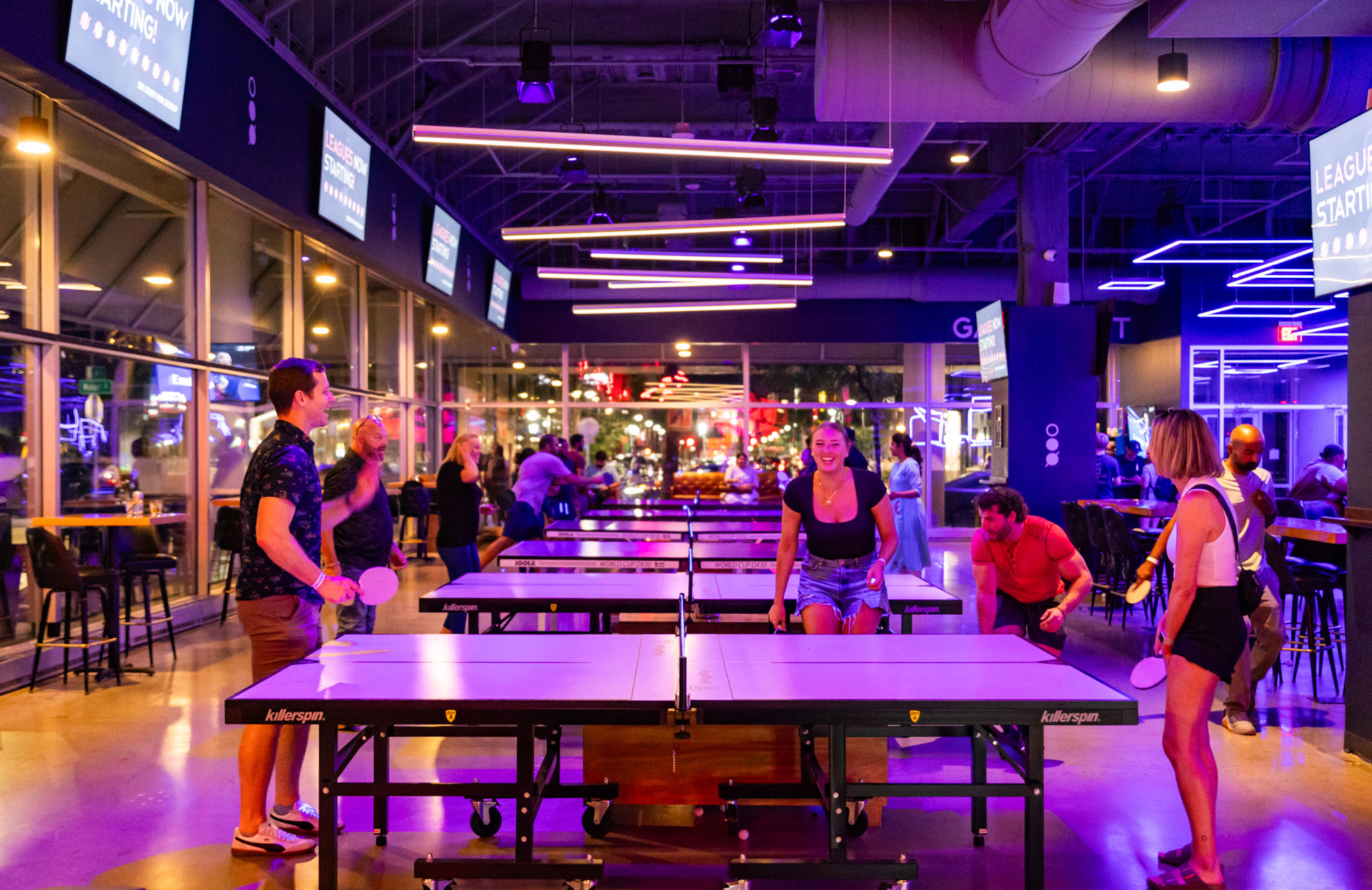
A ping pong match creates a conversation. A team trying to put up the highest score in hoops has something to rally around. A shuffleboard game puts coworkers who may rarely interact on the same side.
The activity takes the pressure off the interaction. People aren't being told to connect. They're playing. And connection tends to happen along the way.
From Free Play to Facilitated Play
Some groups come to Ricochet and simply want access to the games. Grab a drink, pick a game and let the evening unfold. For other groups, especially company events, we can add structure through facilitated play — dedicated hosts guide your group through activities, lead an icebreaker, and run three to four rounds of competition built around lessons on culture, collaboration and team strengths. That might mean dividing a group into teams, rotating them through different games, keeping score or creating a larger competition that gets people moving throughout the space.
Think of it as the difference between handing everyone a basketball and saying "have fun" versus actually starting a game. Both can work. But structure can completely change how much a group interacts.
Looking for something bigger than a few hours? Our daytime rental and retreat options give teams a full day of space, games and structure.
Competition Is a Shortcut to Connection
Something interesting happens when adults are given permission to compete over something that doesn't really matter. People loosen up. A quiet coworker becomes surprisingly intense about Skee-Ball. Someone discovers the person from accounting can dominate a ping pong table. Teams start cheering. People talk a little trash. Stories start forming. Nobody needs to give a speech about collaboration. They're experiencing it.
Friendly competition creates shared moments, and shared moments are what people tend to remember after an event is over.
Designed for Different Kinds of Groups
Facilitated play doesn't have to mean turning every company outing into a tournament. The amount of structure should fit the group. A smaller team might need very little direction. A larger company gathering may benefit from organized rotations or challenges that keep people moving and prevent everyone from settling into the same familiar groups. The goal isn't to force participation. It's to remove the friction that keeps people from participating. When the games are easy to understand and someone helps get things started, joining in becomes much easier.
Team Building Without Calling It Team Building
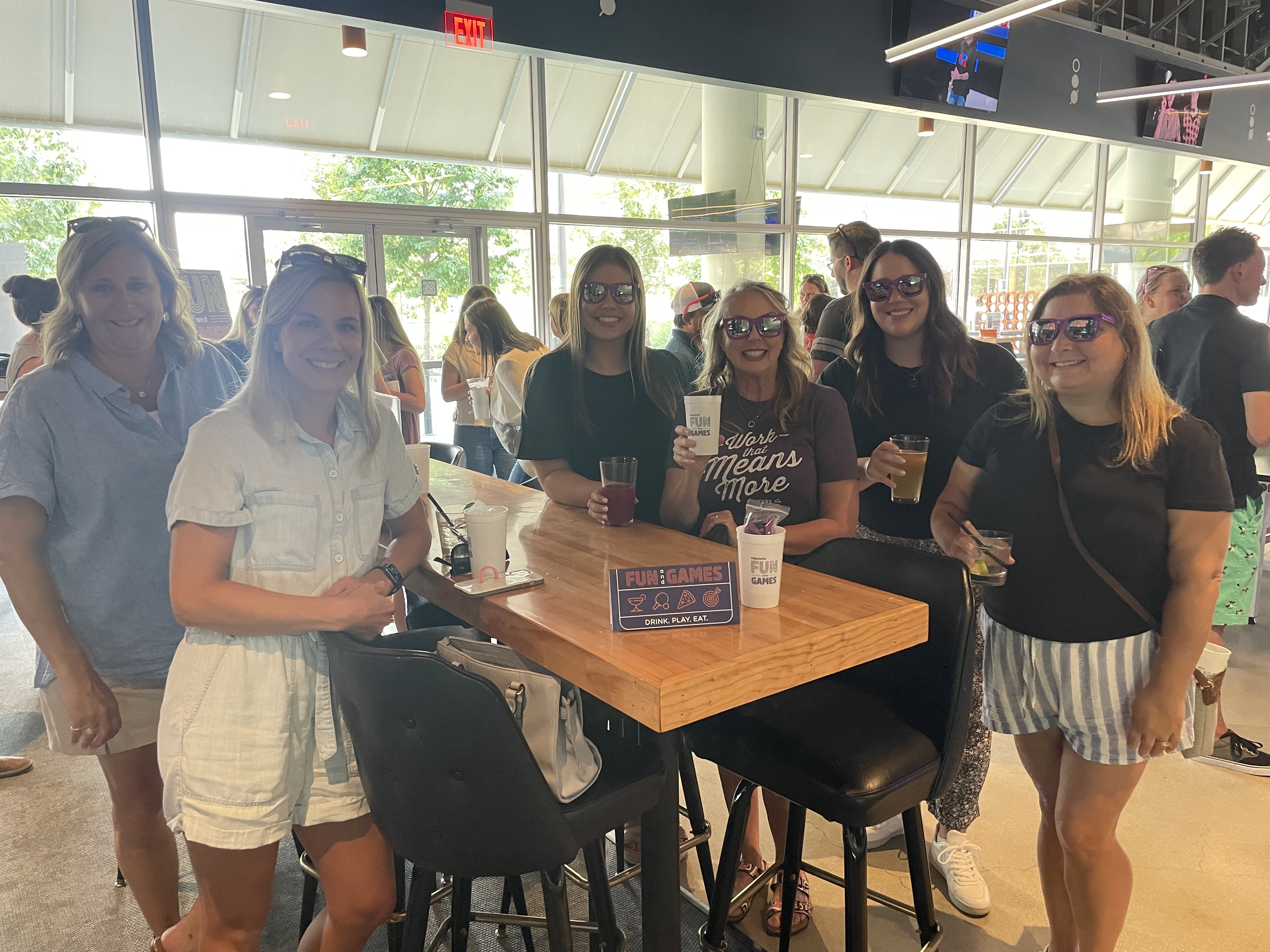
That's what we like most about this approach. The best team-building experiences often don't feel like team building at all. They feel like a great night with coworkers. People had a drink. They played games. They competed. They laughed. They talked to somebody they don't normally talk to. And somewhere in the middle of all of that, the group became a little more connected. That's the kind of team building Ricochet was made for. Don't just give your team something to do.
Give them a reason to interact. Book your corporate event and see for yourself.